BlogHow EkLine Helps Enterprises Win at AI Visibility, GEO, and Agentic Discovery
Learn how EkLine keeps product, API, and developer docs accurate enough for AI engines, search systems, and agents to find, trust, and cite.
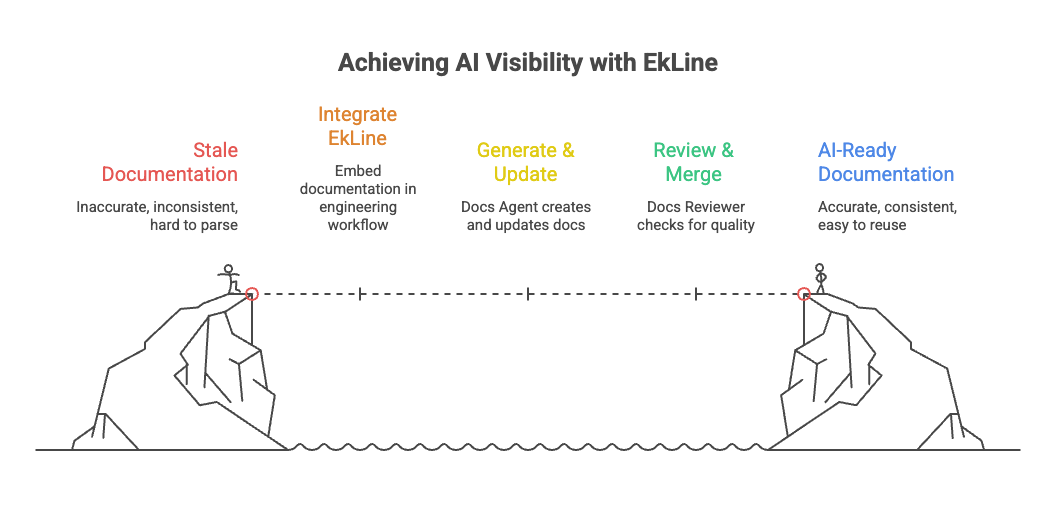
Enterprise AI visibility is no longer only a blog problem. It is a documentation problem, a release-process problem, and a product-knowledge governance problem.
When a buyer asks ChatGPT, Perplexity, Gemini, or Google AI Mode how your API works, the answer is usually not built from your homepage. It is built from product docs, API references, release notes, support answers, integration guides, and third-party mentions. If those sources are stale, shallow, contradictory, or hard to parse, your brand can disappear from the answer even when your product is the right fit.
EkLine gives enterprises a practical way to fix that problem. It helps teams create, update, and review documentation inside the engineering workflow, so the product knowledge AI systems see is more accurate, more consistent, and easier to reuse.
TL;DR
- AI visibility now depends on documentation quality. Blogs help discovery, but API references, integration guides, docs pages, and support-derived knowledge often carry the facts AI systems need to cite.
- EkLine keeps documentation closer to the product release cycle. Docs Agent generates and updates docs from code, pull requests, Slack, Notion, and Jira, while Docs Reviewer checks style, grammar, terminology, links, and structure before docs merge.
- 150+ engineering hours were reclaimed in 3 months in the P0 Security case study, with 15 integration guides shipped and 0 dedicated technical-writing headcount added.
- GEO is moving from content pages to resource surfaces. The rise of Agentic Resource Discovery means tools, APIs, agents, and docs need to be discoverable, trusted, and current.
- EkLine's strategic value is not only "better docs." It turns documentation into a maintained AI visibility layer across product facts, API behavior, integration steps, terminology, examples, and user questions.
- The best enterprise use case is technical, mid-funnel traffic. EkLine fits buyers evaluating documentation automation, API documentation quality, AI-ready docs, docs CI/CD, and developer self-serve onboarding.
Q1. What changed in AI visibility for enterprise software companies?
The old SEO model rewarded pages that ranked. The new AI visibility model rewards sources that can be found, trusted, extracted, and reused inside an answer.
That changes the value of documentation. A technical buyer may ask 5 very specific questions before booking a demo: how authentication works, whether a webhook supports retries, what SDKs exist, how pricing changes at enterprise scale, and whether an integration is supported in their stack. If the answer lives in stale docs, missing docs, or private Slack threads, the AI answer will either skip your brand or describe it incorrectly.
| Visibility layer | What the buyer asks | What AI systems need | What breaks when docs drift | EkLine's role |
|---|---|---|---|---|
| Traditional SEO | "Best API documentation tools" | crawlable pages and topical authority | thin blogs, weak internal links, generic claims | helps create maintained product knowledge behind the content |
| GEO | "Which tool can keep API docs updated from code?" | clear facts, examples, citations, and recent pages | outdated examples and inconsistent terminology | keeps product facts and docs examples fresher |
| Developer evaluation | "Does this API support my integration path?" | accurate API references, guides, and edge-case answers | broken onboarding and support tickets | creates and reviews integration guides near release time |
| Agentic discovery | "Which resource can help this task?" | trusted descriptions of tools, APIs, and capabilities | incomplete resource context and stale docs | makes the underlying docs surface more reliable |
The practical rule is simple: if the documentation layer is weak, the AI visibility layer is weak. A blog can create demand, but documentation decides whether the answer has enough product truth to recommend, cite, or route a buyer toward the brand.
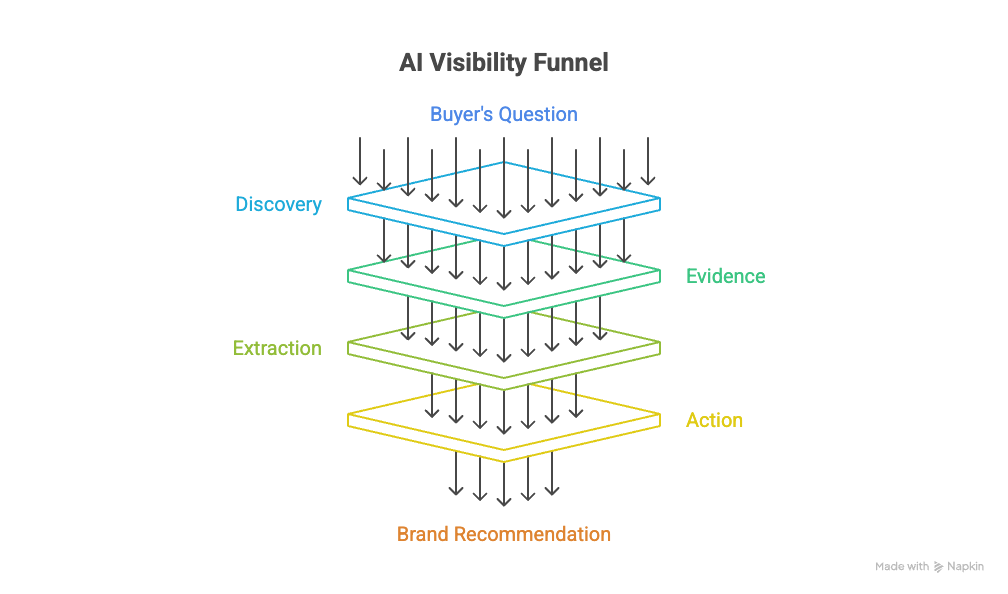
The 4-layer AI visibility stack for technical companies
| Layer | Primary surface | Main owner | What must be true |
|---|---|---|---|
| 1. Discovery | blog, comparison page, category page | SEO and product marketing | the buyer can find the topic |
| 2. Evidence | docs, API reference, case study, release note | product and docs | the claim has proof |
| 3. Extraction | headings, examples, tables, FAQs, links | content and docs | the answer can be pulled cleanly |
| 4. Action | API, integration, agent, demo, support path | engineering and GTM | the user can do the next step |
Most enterprise GEO programs over-invest in layer 1 and under-invest in layers 2, 3, and 4. EkLine matters because it strengthens the evidence and extraction layers where technical buyers and AI systems look for proof.
Q2. Why are product docs becoming an AI visibility asset?
Product docs are becoming an AI visibility asset because they contain the highest-density version of what a product actually does.
Marketing pages explain the promise. Documentation proves the promise. API docs show parameters, authentication, rate limits, SDKs, webhooks, response objects, setup steps, error states, and version changes. For technical buyers, those facts are often more decision-relevant than a brand slogan.
| Documentation asset | AI visibility value | Buyer-stage fit | Example question it can answer |
|---|---|---|---|
| API reference | precise capability evidence | MOFU and BOFU | "Does this API support OAuth, API keys, or SSO?" |
| Integration guide | implementation confidence | MOFU | "How long will setup take with GitHub, Slack, or Jira?" |
| Release note | freshness and product velocity | TOFU and MOFU | "Has this feature changed recently?" |
| Support article | real user pain and resolution | TOFU and MOFU | "Why does this error happen and how do I fix it?" |
| Comparison page | vendor-fit framing | MOFU and BOFU | "How is this different from GitBook, Mintlify, or Vale?" |
| Case study | proof and risk reduction | BOFU | "Has a team like mine used this successfully?" |
This is where EkLine's automated documentation workflow matters. It gives engineering, product, and docs teams a way to keep the source material behind AI answers aligned with the current product.
The problem is not that enterprises lack content. The problem is that product knowledge sits across 6 or more surfaces: code, pull requests, release notes, support tickets, Slack threads, Jira tickets, and docs repositories. AI systems cannot reliably cite what your team never turns into public, structured, maintained knowledge.
The 6 places product truth usually gets trapped
| Source | Typical owner | Visibility problem | EkLine opportunity |
|---|---|---|---|
| 1. Pull requests | engineering | product changes are visible only to reviewers | turn PR context into draftable docs |
| 2. Slack threads | support, product, engineering | correct answers disappear after 1-2 days | convert repeat answers into reusable pages |
| 3. Jira tickets | product and engineering | feature context stays internal | turn shipped work into release-aware docs |
| 4. Support tickets | customer success | recurring questions stay private | create long-tail help articles and FAQs |
| 5. Code comments | engineering | implementation truth is not buyer-readable | convert technical behavior into docs language |
| 6. Existing docs | docs and product marketing | old pages conflict with new product behavior | review, update, and standardize pages |
This is why documentation automation has a GEO angle. The information already exists, but it is usually trapped in places that AI answer engines, agents, and buyers cannot use.
Q3. How does EkLine turn documentation into AI visibility infrastructure?
EkLine turns documentation into AI visibility infrastructure by moving docs from a manual afterthought into the release workflow.
That shift matters because AI visibility is cumulative. Every release that ships without updated docs creates a new gap. Every unanswered support question that stays private creates a missed content asset. Every inconsistent product term creates ambiguity for humans and machines.
EkLine gives teams 2 connected capabilities:
| EkLine capability | What it does | AI visibility impact | Enterprise owner |
|---|---|---|---|
| Docs Agent | generates and updates docs from codebase changes, pull requests, and connected tools | turns product changes into maintained public knowledge | engineering, product, developer relations |
| Docs Reviewer | runs documentation checks in CI/CD before docs merge | reduces stale terms, broken links, weak structure, and inconsistent writing | engineering, docs, DevOps |
| GitHub PR workflow | adds docs review to the same place engineers already work | prevents docs from lagging weeks behind shipped code | engineering managers |
| Slack and Jira inputs | converts scattered operational knowledge into draftable documentation | turns internal answers into reusable external knowledge | support, product, customer success |
| VS Code and CI integrations | catches issues before publication | improves consistency across authors, teams, and releases | platform and docs teams |
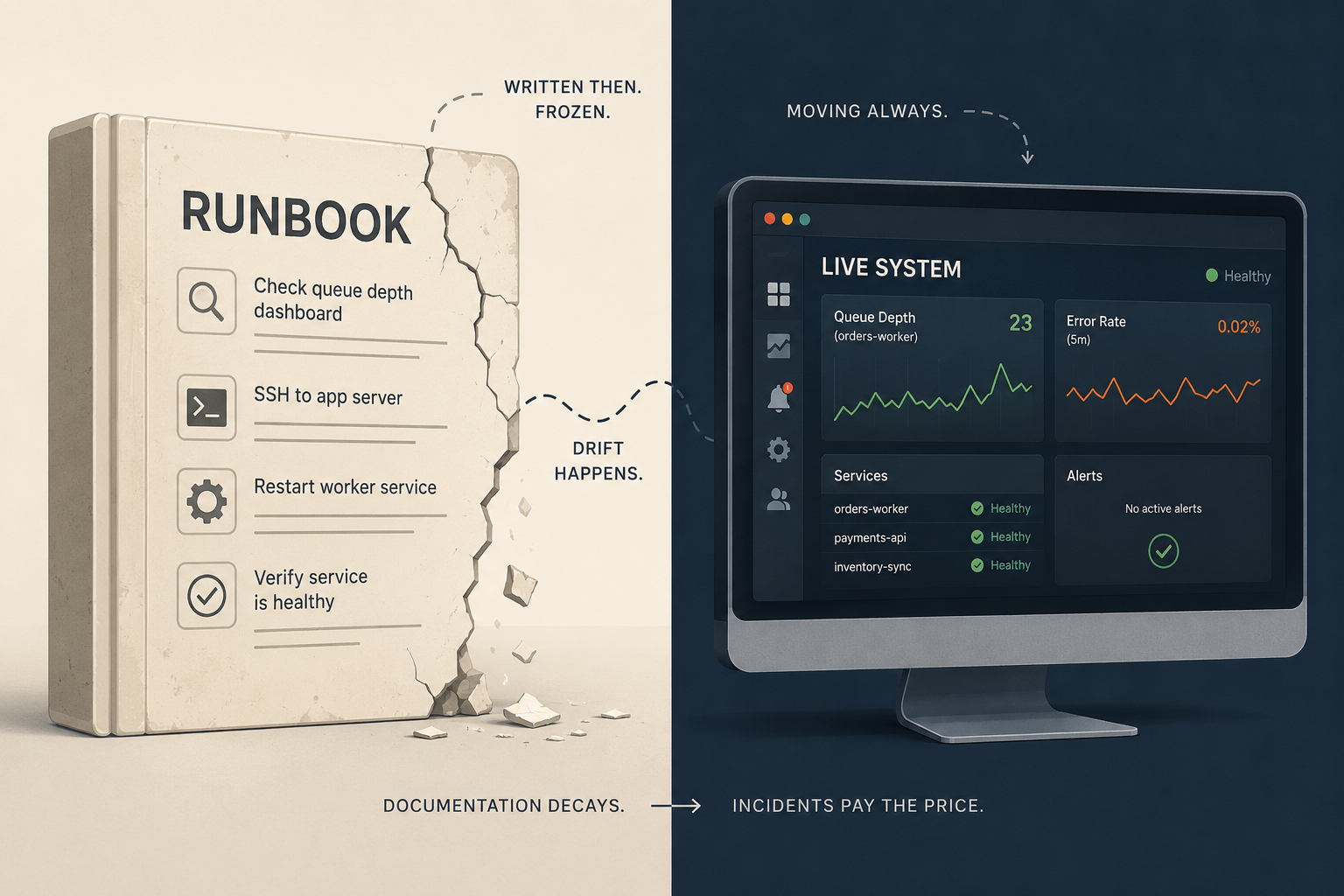
The main advantage is cadence. Manual documentation usually depends on someone remembering to update the page after the feature ships. EkLine changes the default: documentation can be drafted, reviewed, and corrected while the product change is still fresh.
That is the difference between a static knowledge base and a living AI visibility layer.
The 5 documentation signals EkLine protects
| Signal | Why it matters for AI visibility | What to check every sprint |
|---|---|---|
| 1. Freshness | old product facts weaken answer confidence | changed APIs, changed UI, changed permissions |
| 2. Terminology | inconsistent terms confuse entity matching | approved product names, feature labels, role names |
| 3. Examples | examples are the easiest facts to quote incorrectly | code snippets, sample payloads, screenshots, setup steps |
| 4. Links | internal links help route readers through the cluster | docs-to-blog, blog-to-case-study, docs-to-pricing paths |
| 5. Reviewability | unreviewed docs create hidden risk | PR checks, comments, approvals, blocked merges |
The operating benefit is simple: 1 product release should create 1 documentation review, not 1 backlog item that survives for 3 months.
Q4. How does this connect to Google ARD and agentic discovery?
The next phase of AI visibility is not just "Can an AI answer cite your page?" It is also "Can an AI agent discover the right resource, trust it, and use it?"
That shift is visible in Google's broader agent-discovery direction. The GEO Community's breakdown of Agentic Resource Discovery explains how catalogs and registries can help AI agents discover tools, APIs, skills, and other resources across the web.
For enterprise software teams, the implication is direct: agent discoverability will depend on the quality of the resource descriptions around your product. If your API docs, setup guides, integration pages, and support answers are outdated, the agent-facing layer starts from weak ground.
| Agentic discovery requirement | What the agent needs | Documentation risk | How EkLine supports the layer |
|---|---|---|---|
| Discoverability | clear descriptions of what a product, tool, or API can do | vague product pages and missing capability pages | keeps capability docs current and easier to classify |
| Trust | consistent ownership, terminology, and source pages | conflicting docs across versions or teams | enforces terminology and style rules before merge |
| Usability | steps, parameters, examples, and edge cases | outdated snippets and broken integration paths | updates docs from code and PR context |
| Freshness | recent product behavior and release context | docs lagging behind shipped features | connects documentation updates to release workflow |
| Verification | stable pages that support claims | unsupported marketing claims with no technical proof | turns product facts into reviewable documentation |
This does not mean every company needs to expose every technical detail. It means the public documentation layer has to be accurate enough for agents and answer engines to understand what exists, what it does, and when it should be recommended.
EkLine fits this shift because it improves the foundation. It does not merely publish more content. It keeps the product knowledge behind that content aligned with reality.
4 ways agentic discovery changes the documentation brief
| Change | Old content brief | New documentation brief |
|---|---|---|
| 1. From reader to actor | write for a human reader | write so a human or agent can understand the next action |
| 2. From page to resource | optimize 1 URL | maintain the resource context around the URL |
| 3. From claim to capability | say what the product does | prove what the product can do with docs, examples, and guides |
| 4. From campaign to cadence | refresh when traffic drops | review docs with every release, PR, or integration change |
This is the strategic bridge between GEO and documentation automation. The content team can shape the demand narrative, but the documentation system has to keep the capability narrative current.
Q5. What makes documentation more likely to be cited or reused by AI systems?
AI systems reuse documentation when the content is clear, current, specific, internally connected, and easy to extract.
That does not require turning every doc page into a research memo. It requires practical editorial discipline: answer the question directly, use the same product terms across pages, keep examples current, give the model enough context, and connect related pages with descriptive links.
| Requirement | Weak version | Strong version | EkLine angle |
|---|---|---|---|
| Current facts | "This endpoint supports webhook events" | "This endpoint supports invoice.created, invoice.paid, and invoice.failed events" | update facts when code and product behavior change |
| Stable terminology | "workspace," "team," and "account" used interchangeably | 1 approved term used across docs | Docs Reviewer checks terminology consistency |
| Clean hierarchy | long prose page with buried steps | headings, steps, tables, examples, and FAQs | Docs Reviewer catches structure issues |
| Internal linking | "see docs" | [docs CI/CD workflow](https://ekline.io/blog/how-docs-ci-cd-reduces-time-to-first-call-ttfc) | links help route readers and AI systems through the cluster |
| Reviewable proof | unsupported claim | case study, release note, or technical guide | P0 Security proof anchors the value |
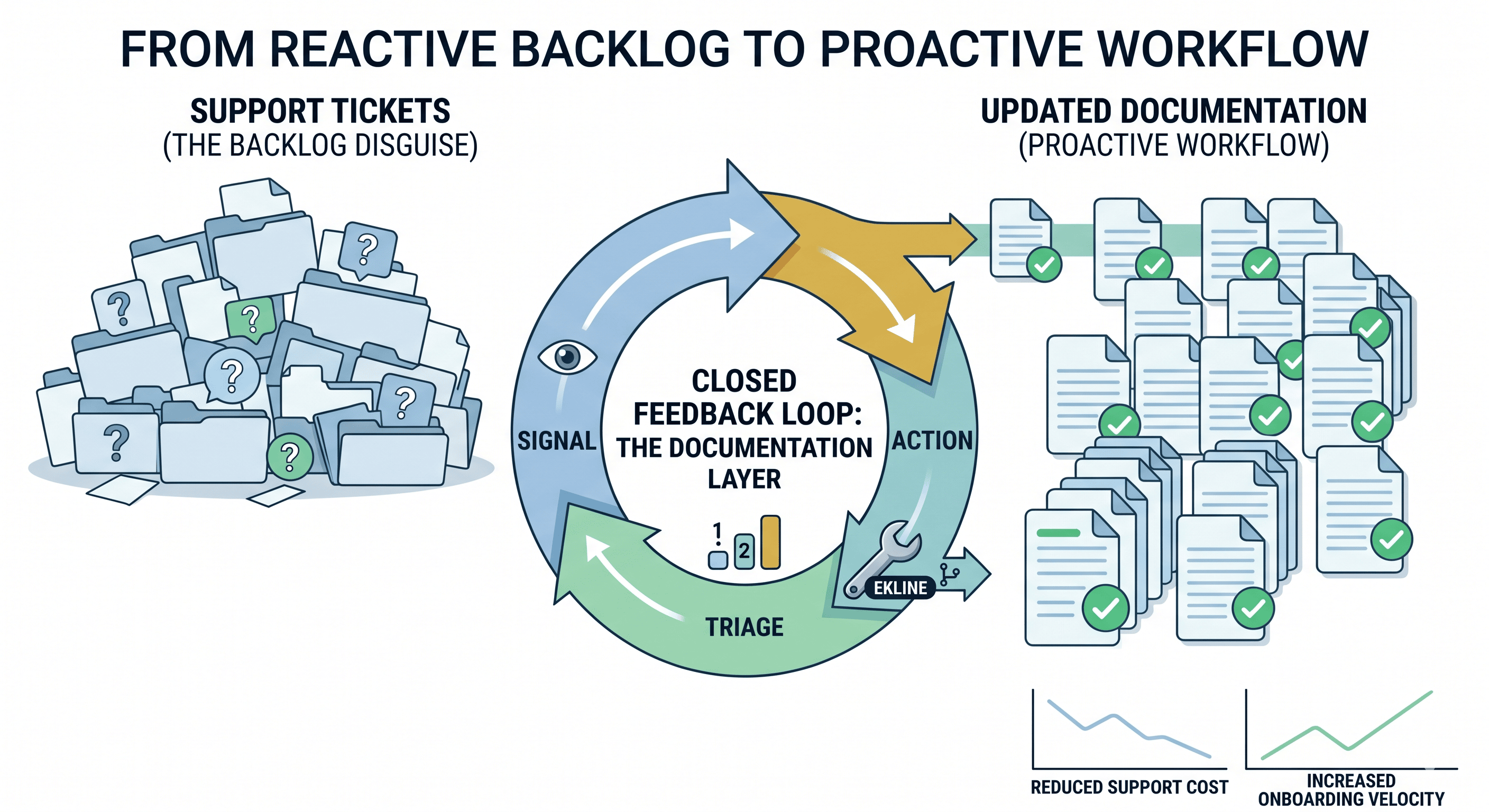
| Reusable answers | private support reply | public support-derived article or FAQ | support gaps become discoverable knowledge |
The practical test is this: could a technical buyer or AI assistant extract a correct answer from the page in 30 seconds?
If the answer is no, the issue is usually not "more SEO." It is stale product knowledge, poor content structure, unclear terminology, or missing proof. EkLine is useful because those problems live inside the documentation workflow, not only inside the marketing calendar.
The 10-question AI visibility audit for docs
| Question | Pass condition | Fix if it fails |
|---|---|---|
| 1. Can the page answer the buyer's exact question in the first screen? | the answer appears before the reader scrolls twice | add a direct answer block |
| 2. Does the page name the product, feature, or API consistently? | 1 approved term is used across the page | run terminology review |
| 3. Are examples current with the latest release? | snippets and screenshots match production behavior | update examples from code or PR context |
| 4. Does the page include a next step? | demo, docs, pricing, API reference, or related guide is linked | add an intent-matched CTA |
| 5. Are related pages connected? | at least 3 relevant internal links exist | add descriptive in-text links |
| 6. Is there proof beyond a claim? | case study, guide, release note, or technical example supports it | add evidence or remove the claim |
| 7. Can support use the page to deflect a ticket? | the page answers a recurring support question | add troubleshooting or FAQ coverage |
| 8. Can sales engineering use the page in a deal? | the page explains implementation risk clearly | add workflow and buyer-fit details |
| 9. Can AI systems extract the answer without guessing? | headings, tables, bullets, and examples carry the facts | simplify buried prose |
| 10. Was the page reviewed during the last relevant release? | release and docs review are connected | add docs review to the PR workflow |
This audit works because it is not a generic SEO checklist. It tests whether documentation can answer, prove, route, and stay current.
Q6. Where does docs drift damage GEO the most?
Docs drift damages GEO most in mid-funnel technical research, where the buyer already knows the problem and is comparing implementation risk.
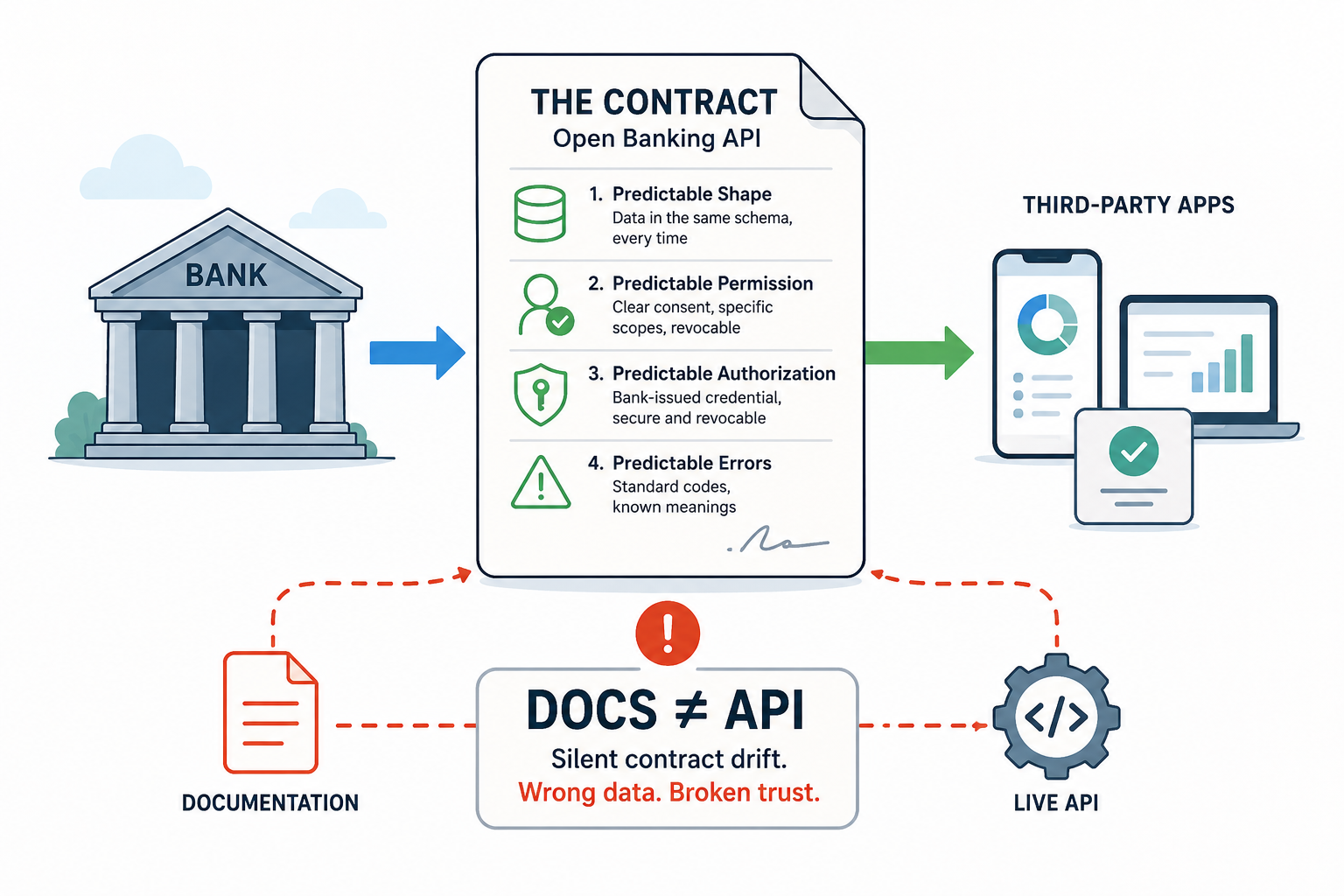
A TOFU reader may tolerate a broad explanation. A MOFU buyer will not. They are looking for evidence that your API, integration, workflow, or support model will work inside their environment. If your docs contradict the product, the buyer loses trust before a sales call happens.
| Docs drift surface | What changes | AI visibility damage | Business damage |
|---|---|---|---|
| API examples | endpoint names, parameters, SDK snippets | AI answers repeat outdated implementation details | failed first call, longer onboarding, developer frustration |
| Integration guides | setup flow, permissions, third-party UI | AI answers recommend wrong steps | more support tickets and lower self-serve completion |
| Release notes | feature availability, version changes | AI systems miss recent product improvements | weaker competitive positioning |
| Support articles | error states and fixes | common user problems stay private | repeated tickets and weaker long-tail coverage |
| Comparison pages | feature boundaries and buyer-fit criteria | AI systems misclassify the product | lost shortlist opportunities |
| Knowledge base articles | terminology, navigation, cross-links | facts are harder to connect across pages | weaker cluster authority and lower recirculation |
EkLine's strongest positioning is that it helps teams close those gaps at the source. The Docs Reviewer catches quality issues before merge, while Docs Agent helps generate and update documentation from the places where product truth already lives.
That matters because documentation quality is no longer only a customer-success metric. It is becoming a search, GEO, developer experience, and agent-readiness metric at the same time.
3 places docs drift turns into revenue drag
| Revenue moment | What the buyer expects | What stale docs create | Better EkLine-backed outcome |
|---|---|---|---|
| 1. Pre-demo research | accurate technical fit before talking to sales | the buyer thinks the product lacks a capability | current docs show the capability and route to a demo |
| 2. Proof-of-concept | working setup without 5 support calls | engineers burn days debugging old examples | docs and examples match the current product |
| 3. Expansion | new teams self-serve integrations | account teams repeat the same enablement answers | support questions become reusable docs |
For a technical product, these 3 moments often decide whether documentation is just a help center or a revenue surface.
Q7. What proof does EkLine have for enterprise teams?
EkLine's clearest proof is the P0 Security case study.
In 3 months, P0 Security reclaimed 150+ engineering hours by shifting engineers from writing documentation to reviewing documentation. The team shipped 15 integration guides, reduced the need for direct engineering involvement, and added 0 dedicated technical-writing headcount for that workflow.
| Proof point | Number-first version | What it proves | Why it matters for AI visibility |
|---|---|---|---|
| Engineering time | 150+ hours reclaimed in 3 months | docs work can be reduced without removing engineer review | more product knowledge can become public without pulling engineers away from roadmap work |
| Integration coverage | 15 integration guides shipped | technical docs can scale with product complexity | more implementation pages means more citable capability evidence |
| Writing burden | 0 dedicated technical-writing headcount added | docs can scale through workflow automation | smaller teams can maintain a larger documentation surface |
| Review time | 15-minute review instead of a 2-3 hour writing session | expert time moves from drafting to verification | docs stay closer to engineering truth |
| Revenue support | docs became a go-to-market asset | documentation supports sales and marketing, not only support | more docs can influence AI answers before the demo |
The important lesson is not that every company will get the same result. The lesson is that AI visibility requires maintained knowledge, and maintained knowledge needs an operating system.
EkLine gives engineering-led companies that operating system: create docs from the source of truth, review docs inside the workflow, and keep docs aligned with shipped product.
Q8. How should enterprises measure AI visibility improvements from documentation?
Enterprises should measure AI visibility improvements with a mix of documentation quality metrics, developer-experience metrics, and answer-surface metrics.
Do not start with a vague question like "Are we doing GEO?" Start with 10 concrete product questions your buyers ask before they convert. Then check whether your public docs answer those questions accurately, whether AI engines can find those answers, and whether support tickets repeat the same gaps.
| Metric | What to measure | Owner | Good operating cadence |
|---|---|---|---|
| Docs freshness | pages updated within the last release cycle | product and docs | every release |
| Docs drift rate | pages where product behavior and docs disagree | engineering and QA | every sprint |
| Time-to-first-call | time from opening docs to successful API call | developer relations | monthly |
| Support deflection | repeated tickets answered by docs | support and customer success | monthly |
| AI answer accuracy | whether ChatGPT, Perplexity, Gemini, and Google AI Mode describe the product correctly | SEO and product marketing | monthly or quarterly |
| Citation coverage | which pages AI systems cite for priority questions | SEO and content | monthly |
| Internal link coverage | whether related docs, blogs, and case studies route to each other | content and SEO | monthly |
EkLine should sit close to the first 4 metrics. It improves the raw material: freshness, accuracy, review quality, and technical coverage. Marketing and SEO teams can then use that stronger documentation layer to build better blogs, comparison pages, FAQs, and AI visibility tests.
That is the right division of labor. EkLine improves the product knowledge system. Content teams turn that product knowledge into demand capture. AI systems reward the combined surface when it is easier to discover, parse, and trust.
A 30-60-90 day measurement plan
| Timeline | Goal | Work to complete | Output |
|---|---|---|---|
| Days 1-7 | map priority questions | collect 10 buyer questions from sales, support, and docs search | question inventory |
| Days 8-14 | identify weak pages | score current docs against freshness, proof, examples, and links | docs gap list |
| Days 15-30 | repair the highest-risk pages | update top 5 pages with current product facts and proof | first visibility-ready cluster |
| Days 31-60 | connect docs to content | add internal links from blog, docs, case study, and product pages | stronger cluster routing |
| Days 61-90 | test AI answer accuracy | run the same 10 questions across 4 answer engines | accuracy and citation baseline |
This plan gives the team 3 checkpoints instead of 1 vague GEO goal. By day 30, the raw documentation should be stronger. By day 60, the cluster should route better. By day 90, the team should know which AI answers still misread the product.
A 100-point AI visibility documentation scorecard
This scorecard is an editorial readiness model, not a public performance claim. Use it before and after an EkLine-backed documentation sprint.
| Criterion | Points | Pass threshold | What earns the points |
|---|---|---|---|
| Freshness | 10 | 8/10 | priority docs updated within the latest release cycle |
| Product accuracy | 10 | 9/10 | examples, screenshots, parameters, and steps match the current product |
| Terminology consistency | 10 | 8/10 | product names, feature names, and role names are used consistently |
| API and integration proof | 10 | 8/10 | API references, setup guides, and integration pages support the claim |
| Internal linking | 10 | 7/10 | related docs, blog posts, case studies, and product pages are connected |
| Support-answer coverage | 10 | 7/10 | recurring ticket themes are answered publicly |
| Case-study proof | 10 | 6/10 | at least 1 concrete customer proof point supports the category claim |
| AI answer accuracy | 10 | 7/10 | 4 major AI answer engines describe the product correctly for priority questions |
| Review workflow | 10 | 8/10 | docs review is connected to PRs, CI, or release process |
| Conversion path | 10 | 7/10 | the page routes to demo, pricing, docs, or implementation next step |
An enterprise docs cluster scoring 70/100 is usually usable. A cluster scoring 85/100 is much more defensible for GEO, AI answer accuracy, sales engineering, and agent-readiness work.
A practical first sprint can be deliberately small: update 5 priority docs, add 10 support-derived FAQs, repair 15 in-text internal links, verify 20 code or setup examples, test 10 buyer questions across 4 AI answer engines, and connect docs review to 1 release workflow. A second sprint can add 3 comparison pages, 6 release-aware guides, 12 troubleshooting answers, 2 case-study CTAs, and 1 BOFU product page route.
Q9. When is EkLine the right fit for AI visibility and GEO?
EkLine is the right fit when your AI visibility problem is caused by fast product change, technical documentation gaps, and scattered product knowledge.
It is less useful if your only problem is top-of-funnel editorial content. A company with 5 static marketing pages and no API, no developer docs, no integration workflow, and no technical support burden may need a content strategy first. EkLine becomes more valuable when product truth changes faster than humans can keep docs updated manually.
| Buyer type | Choose EkLine when | Use another approach when |
|---|---|---|
| API-first SaaS | endpoints, SDKs, webhooks, or examples change often | docs are static and rarely updated |
| Developer platform | onboarding depends on accurate guides and code samples | the product has no technical setup path |
| Enterprise software company | multiple teams create docs with inconsistent terminology | 1 owner maintains a small docs set manually |
| AI or data infrastructure company | buyers evaluate technical proof before demos | most demand comes from non-technical brand content |
| Product-led growth team | self-serve docs reduce sales and support friction | every deal is fully sales-led with no docs usage |
| Support-heavy team | repeated tickets reveal missing public answers | support issues are unrelated to documentation |
The strongest EkLine use case is an engineering-led company where documentation is already a revenue, support, and trust surface. If docs influence onboarding, API adoption, implementation confidence, sales engineering, or customer expansion, then docs also influence AI visibility.
5 signs EkLine should be evaluated this quarter
| Sign | What it means | Why it is urgent |
|---|---|---|
| 1. Engineers write docs after releases | documentation is not tied tightly enough to the product workflow | every release creates possible AI-answer drift |
| 2. Support repeats the same setup answers | useful knowledge is trapped in tickets | the long-tail content surface is underbuilt |
| 3. API examples break during onboarding | docs are hurting developer trust | AI answers may repeat the same broken path |
| 4. Sales engineers explain features that docs should prove | docs are not doing enough mid-funnel work | demo calls become education calls |
| 5. Product terms vary by team | entity consistency is weak | AI systems and buyers may misclassify the capability |
If 3 or more of these 5 signs are true, the issue is not only content production. It is documentation operations.
FAQ
Is GEO only about blog posts?
No. Blogs help answer broad discovery questions, but product docs, API references, integration guides, release notes, support articles, and case studies often carry the facts AI systems need for technical answers. For EkLine, the documentation layer is the highest-leverage GEO surface because it contains product truth.
How does EkLine help with AI visibility without being an SEO tool?
EkLine improves the source material that AI systems use: current docs, accurate examples, consistent terminology, reviewed structure, and public answers to recurring product questions. SEO and content teams still need strategy, but EkLine helps make the underlying product knowledge more trustworthy.
Why does Agentic Resource Discovery matter for documentation?
Agentic Resource Discovery points toward a web where agents discover tools, APIs, skills, and resources more dynamically. In that world, accurate documentation becomes part of discoverability because agents need to understand what a resource does before they can trust or use it.
What is the biggest documentation risk for AI visibility?
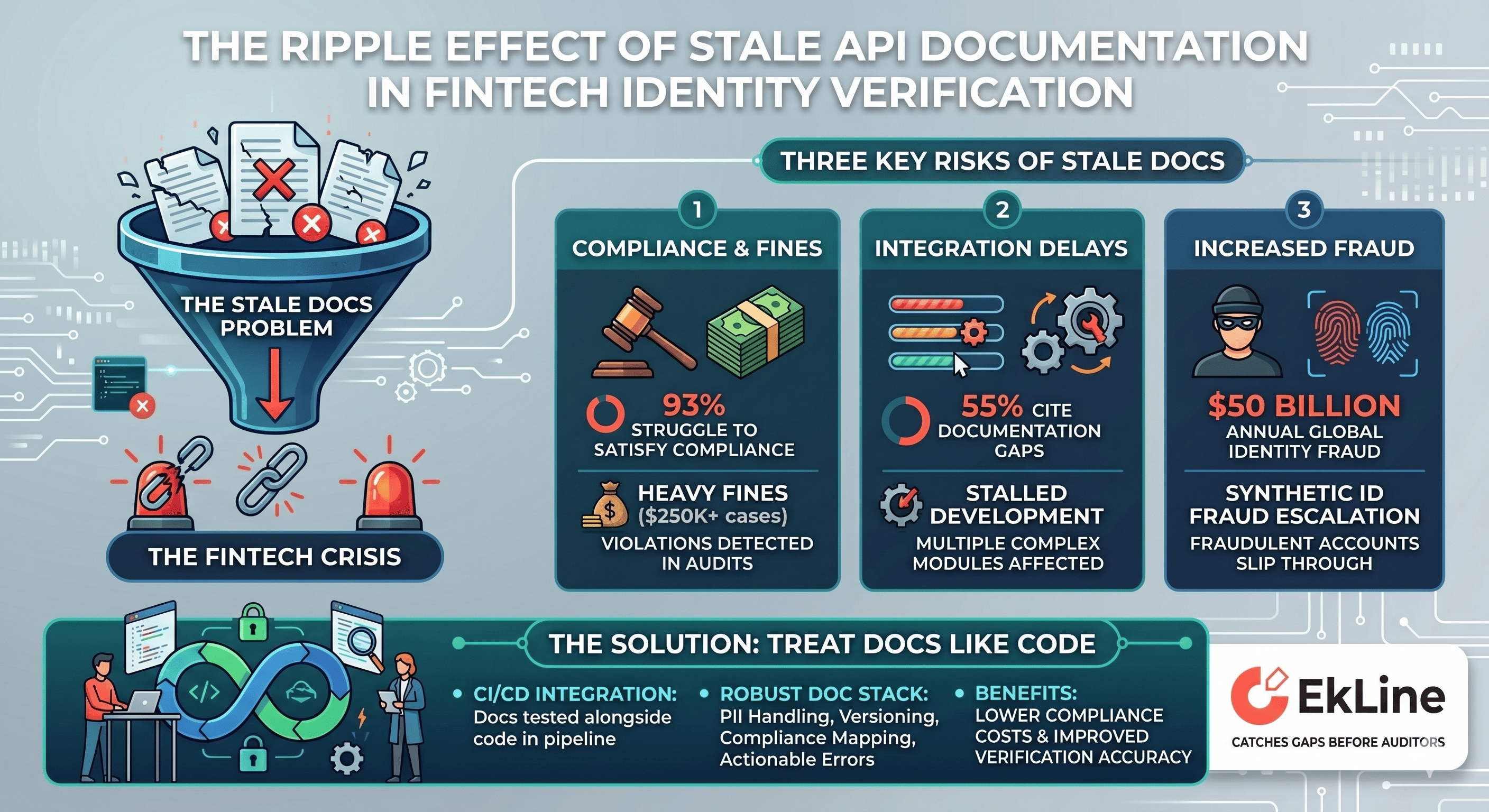
The biggest risk is docs drift. If the product changes but the documentation does not, AI systems can repeat outdated claims, cite the wrong page, or skip the brand because the available evidence is inconsistent. Docs drift is especially damaging for API-first products, integrations, and developer tools.